
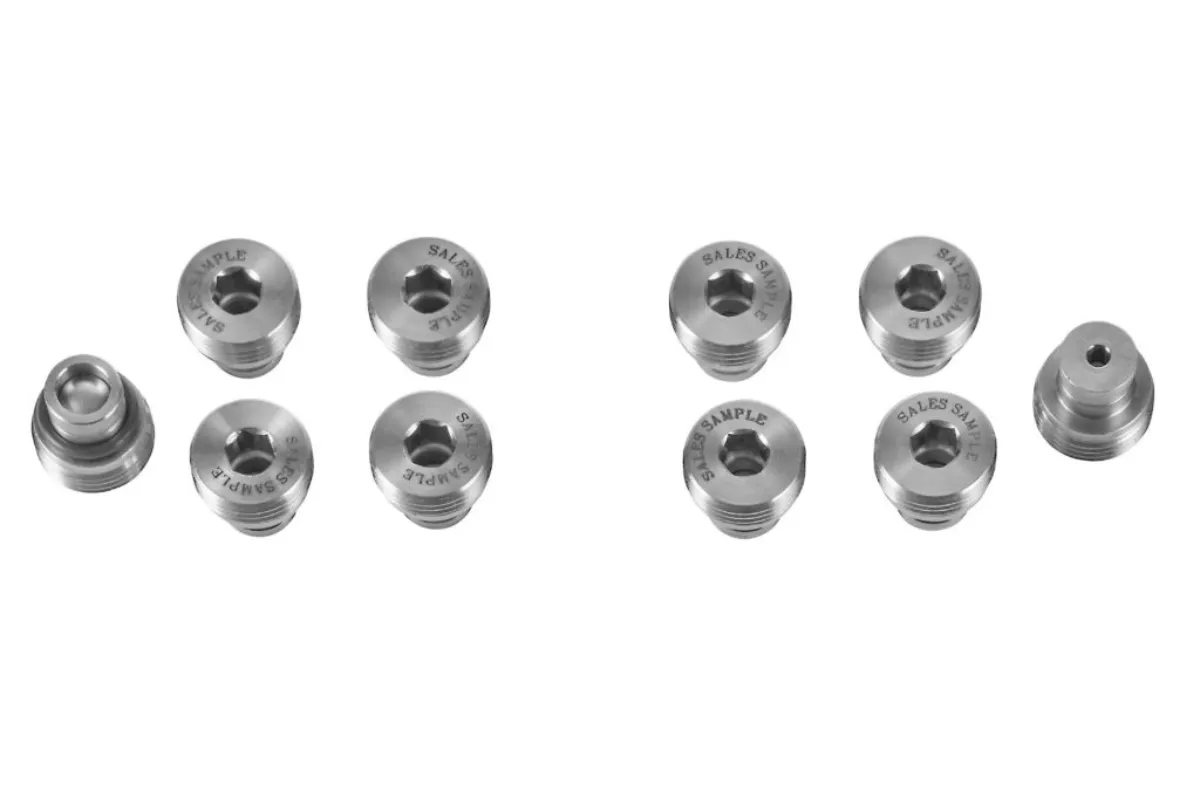
In short: This line groups rupture discs designed for well drilling and completion tools. They are used for two purposes: activating downhole tools through a controlled pressure pulse, and protecting downhole components against overpressure, in place of shear pins or other moving mechanisms.
How it works
In many downhole tools, a function (opening a port, moving a piston, releasing a tool) is triggered when a certain pressure is reached in the string. Traditionally this is solved with shear pins: parts that break when a load is reached and release the mechanism. A rupture disc does the same thing, but the trigger point depends on the differential pressure across a calibrated membrane rather than on the shear strength of a pin that is also subject to friction, wear, and assembly tolerances.
When the pressure exceeds the marked value, the disc opens and connects two chambers or zones of the tool; that flow is what activates the mechanism or relieves the overpressure. Since no parts slide, the assembly is simplified.
The line is offered in two configurations according to the direction of rupture: Type A, which bursts in the upward direction, and Type I, which bursts in the downward direction. Choosing the wrong configuration means the disc will see the pressure from the wrong side and will not act at the intended value.
When it makes sense (and when it does not)
- Suitable when a repeatable activation point is required and mechanical parts subject to wear are to be eliminated.
- Suitable for protecting downhole components that must not be exposed to a pressure above their design pressure.
- Suitable if you want to reduce assembly time and intervention at the drilling site.
- Not suitable if the function must be repeatable several times without removing the tool: the disc acts only once.
- Check the bottomhole temperature and the well fluid chemistry, because both affect the actual burst pressure and material selection.
Data to specify it
- Function: tool actuation or overpressure protection.
- Required burst direction (Type A or Type I).
- Differential burst pressure and acceptable tolerance.
- Temperature at the point of installation.
- Well fluids present and housing geometry in the tool.
| Application | Tool activation and downhole protection |
|---|---|
| Replaces | Shear pins and other moving devices |
| Configurations | Type A (upward burst) and Type I (downward burst) |
To go deeper: What is a rupture disc and How to select a rupture disc.
Descriptive sheet for educational purposes. For availability and a quote for this model, consult P&V Control Devices.